Electronics and IoT: from the circuit to the dashboard.
We design the circuit, the board and the firmware, and also the software where you see the data. If you already have hardware installed, we integrate with it instead of replacing it.
That is how we built Edgemon.
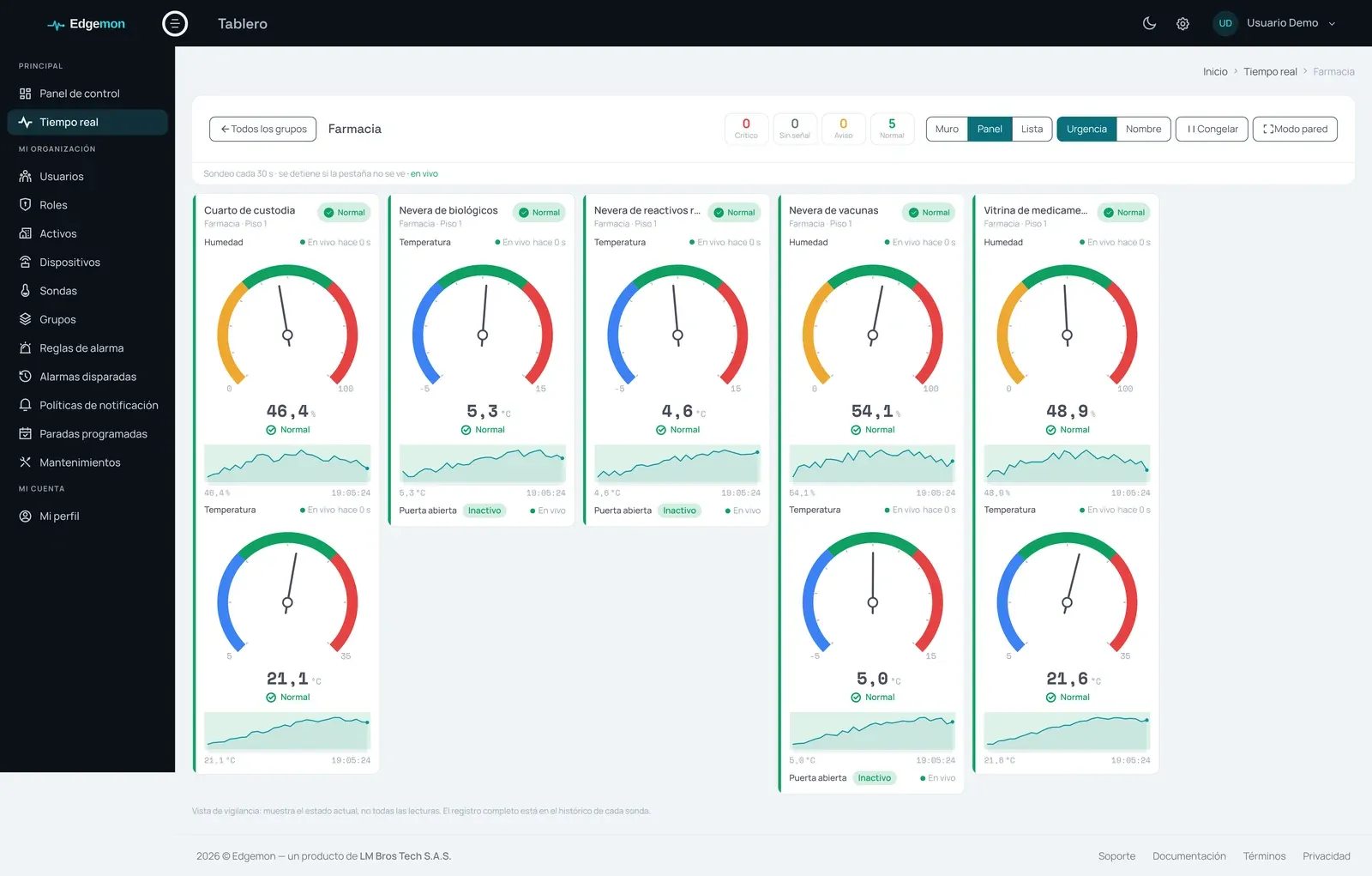
Our temperature and humidity monitoring: we built the device, the connectivity, the alerts and the dashboard. It is now in a pilot program.
What we do
Circuit and PCB design
Electronic design, board and prototype built for your need.Schematic · PCB · prototype
Firmware and connectivity
Data capture and delivery over Wi-Fi, Ethernet or cellular, with local storage if the internet drops.Wi-Fi · Ethernet · GSM
Telemetry
Transmission and storage of variables from the device to the cloud.MQTT · HTTP
Dashboards and alerts
Real-time dashboards and email and SMS alerts, as in Edgemon.Activation delay · hysteresis
We start small and measure.
We understand the process that hurts the most
We ask before writing a line of code, and we measure how many hours a month go into manual work today.
We build only that module
A pilot in production in four to six weeks, for a fraction of the total cost.
If it works, we keep going
We grow module by module and keep it running in production. If it doesn't work, you learned it cheaply.
Frequently asked questions
Do you design the circuit or only the software?
Both: electronic design, PCB, prototype and firmware, plus the dashboard where you will read the data. If you already have hardware installed, we integrate with it instead of replacing it.
What happens if the plant loses internet?
The device stores the readings and uploads them when the connection returns, so the history is not lost. If the outage drags on, the system reports it as offline instead of pretending everything is fine.
Can it integrate with the system I already have?
Almost always, over an API or a webhook. The first thing we check is what your current system exposes; if it exposes nothing, we can read the database or exchange files.
How many sensors do I need?
Fewer than you think. You start with the points where a deviation costs money and grow from there. A pilot of three to five devices is usually enough to decide.
Which variable do you need to see in real time?
Tell us where the equipment is and what happens when something goes out of range.